Jèrriais, the language of Jersey
February 16, 2026 2 CommentsIf you want to learn Jèrriais, you do not need to live on Jersey, but visiting the island makes the language feel real fast. I started learning Jèrriais through L’Office du Jèrriais in late 2024, and I’m still studying it now.
This post covers what Jèrriais is, why I’m learning it, what the Eisteddfod is like, and the resources that have helped me most.
Understanding the languages from my islands
When people think about languages in my islands, they often stop at the Germanic and Celtic ones: English, Scots, Welsh, Irish, Scottish Gaelic, Manx, Cornish.
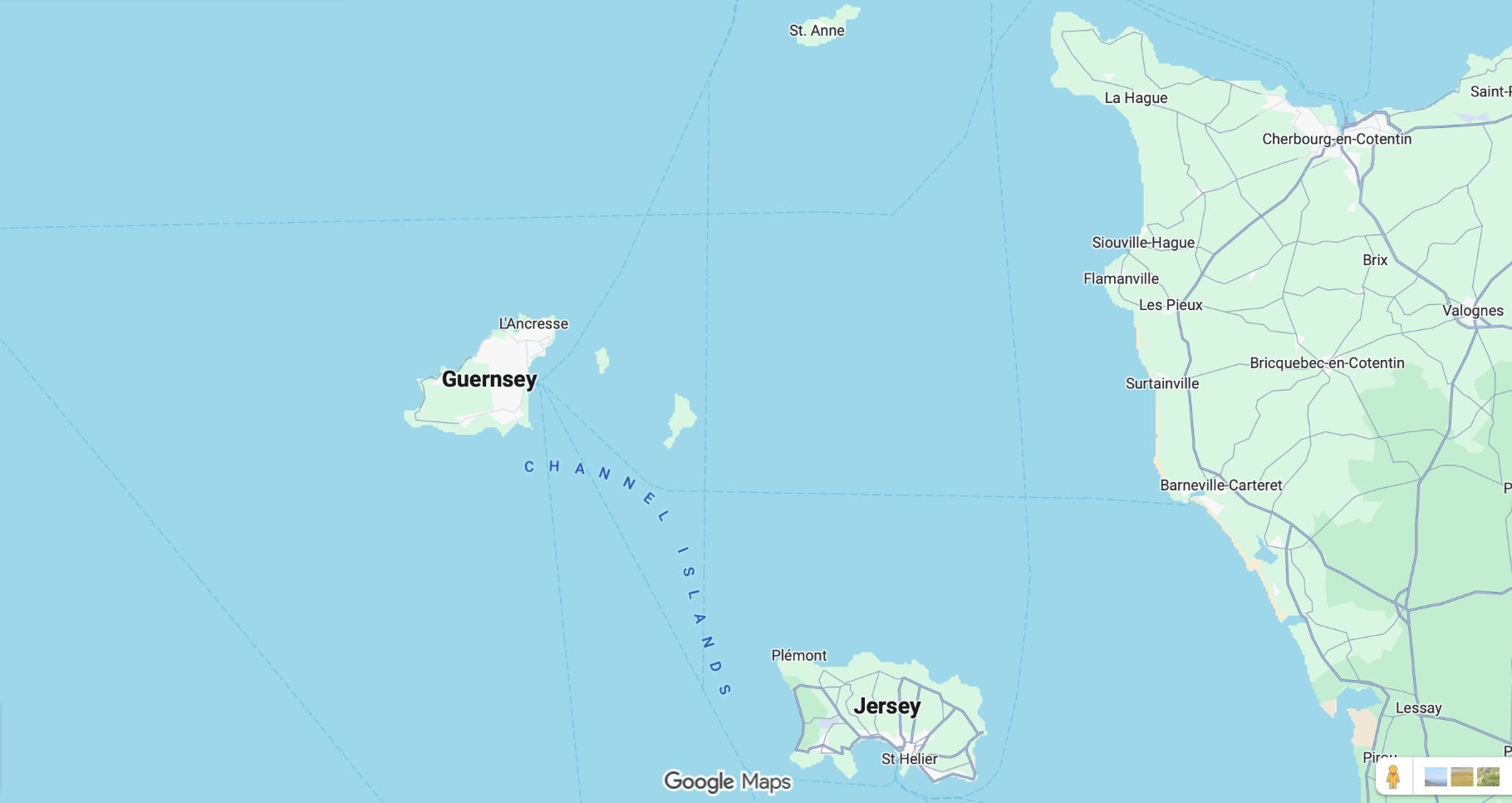
Romance languages rarely get mentioned first. But the Channel Islands have them too. Jersey has Jèrriais, a Norman language spoken on the island. Jersey isn’t the only one though. You’ll also hear about Guernésiais (Guernsey), Sercquiais (Sark), and Auregnais (Alderney) too.
Is it basically French?
No. Jèrriais isn’t French. It’s a Norman language with its own grammar, spelling conventions, sound system, and core vocabulary. If you already know French, it helps a lot, but you still have to learn Jèrriais on its own terms.
Here is just one huge difference:
A living simple past (preterite) vs French’s mostly literary passé simple
Jèrriais keeps a preterite (often called “past historic” in English descriptions) as a normal part of the verbal system, including outside formal writing. Standardised French still has the passé simple, but most speakers don’t use it in everyday conversation (they use passé composé instead). Jèrriais grammar references this as the Preterite Tense / Past Historic Tense. It uses the passé composé and passé simple similarly to the Standarised Castillian Spanish of Spain, where speakers contrast the pretérito perfecto compuesto and pretérito perfecto simple (pretérito indefinido) more actively than in many Latin American varieties.
- Jèrriais: j’pâlînmes “we spoke”
- French (literary): nous parlâmes “we spoke”
- French (everyday): on a parlé “we spoke”
As a result, in Jèrriais you’ll meet a ‘simple past’ much earlier in your studies than you would at school in French class.
Why bother learning Jèrriais?
Tech can translate a menu and some conversations even. But it can’t replace what you get from learning even a bit of a community language.
For me, learning Jèrriais does a few useful things:
- It gives you another lens on Jersey’s history and identity.
- It makes place names and local expressions feel less opaque.
- It feeds into what I call “adjacent learning”, the way one language sharpens how you hear and understand another.
It also pushes you to slow down and listen. That matters with languages like Jèrriais in particular.
The Jèrriais Eisteddfod
The The Jersey Eisteddfod was established in 1908, after the event in Wales (Eisteddfod Wales). Through this annual festival Jersey continues to celebrate its local language and culture.

This year I decided to take part. I learned a poem (“À la Campangne” by Florence M Hacquoil) by heart and recited it on stage. What stayed with me most was not “performance”. It was how many people, of different ages, got up and used Jèrriais in public, with warmth and confidence. Professor Mari Jones joined us to help judge how we performed and the event was covered by Jersey Evening Post too.
That kind of event does something classes alone can’t do. It gives the language a social centre. The people of Jersey build on this by organising many other in-person activities to use and learn the language more.
Tama, and young Jèrriais on social media

One of the best things about this trip was meeting Tama Coxshall, a young man from Jersey who is also learning Jèrriais and sharing it publicly. He speaks about Jèrriais online, and he is part of a new wave of people giving the language visibility with normal, everyday content.
Tama also read a poem at the Eisteddfod, and he’s doing real work to keep Jèrriais present among younger islanders and more seasoned speakers alike, as well as international audiences too. (See his TEDxSt Helier talk.)
You can follow Tama here:
- TikTok: Bordelot (https://www.tiktok.com/@bordelot)
- Instagram: (https://www.instagram.com/bo_rdelot/)
- YouTube: (https://youtube.com/@tamalejerriais)
- Facebook (https://www.facebook.com/profile.php?id=61578162246416)
La Hougue Bie and Mont Orgueil Castle
The day after the Eisteddfod, Tama kindly took me out to see more of the island, including La Hougue Bie and Mont Orgueil Castle (see photo above). It was the perfect way to connect the language to places and get to know more about the island.
Music in Jèrriais
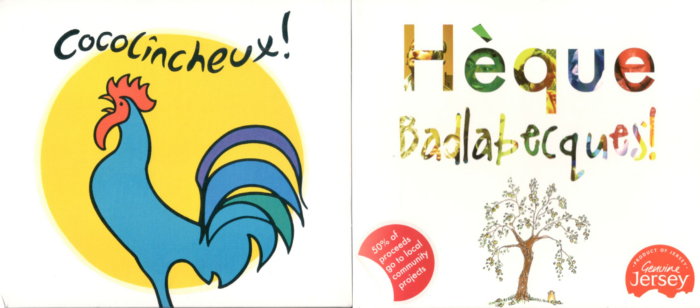
Tama’s family has a band called Badlabecques! and they play music in Jèrriais. They gave me two of their albums to listen to. You can find them on Instagram and hear some lovely music in Jèrriais: https://www.instagram.com/beteamyfriend.
How do you learn Jèrriais?
If you would like to join a class, like I did, then you can fill out this form. Likewise there is an option to get further information from me about the language and any activities I create about it in due course too. Here is the link for you to use for this: Learning Jèrriais
Susan Parker is one of the teachers on Jersey and she showed me some of the wonderful editions that have been released for children, as well as some of the great books for learners like me.
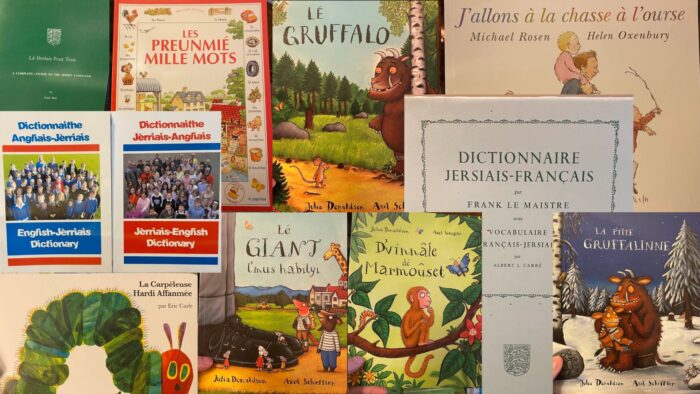
Resources Section of L’Office du Jèrriais
Société Jersiaise (Check out their shop for books)
My teacher, Aline Cattermole, has been great at showing us brilliant online resources to improve and practise our Jèrriais too. Check out these links below:
BBC Voices from Jersey (including Jèrriaise programmes)
Soundcloud Jèrriais (songs, poems, stories and other audio)
Talking about Jèrriais
I delivered a presentation about my journey with Jèrriais at the Polyglot Gathering Online on 7th March 2026, if you would like to hear more from me about this linguistic adventure, then you should be able to watch the recording soon (I will add the direct here to it when it is released)!

If you’re in Jersey and want a walk that brings Jèrriais into the experience, have a look at Oyez. It’s a set of recordings linked to places around St Helier, so you can hear local place names and short audio as you go. https://oyez.je
You can also follow the route on Google Maps Street View and listen along from anywhere. Or just listen to the recordings on their own if you want some low-effort Jèrriais input.
Categorised in: Endangered Languages, Indigenous Languages, Language Events
This post was written by Richard

2 Comments
Thank you Richard
I too have been learning Jèrriais for some years, though my time is for studying in depth are now limited due to caring duties, and also depressingly deteriating hearing. My main problem though is that my maternal language being French, my brain cant stop my pronounciation is also French, which can offend our native speakers.
Mèrci bein des fais
Elizabeth, I’m glad to read that you’re interested in the language. I hope you keep studying it when you can. My teacher is a native French speaker and she’s widely respected, so I think the effort you’re putting in and the respect you’re showing by learning it will outweigh any minor criticism about French influence in your pronunciation.